 |
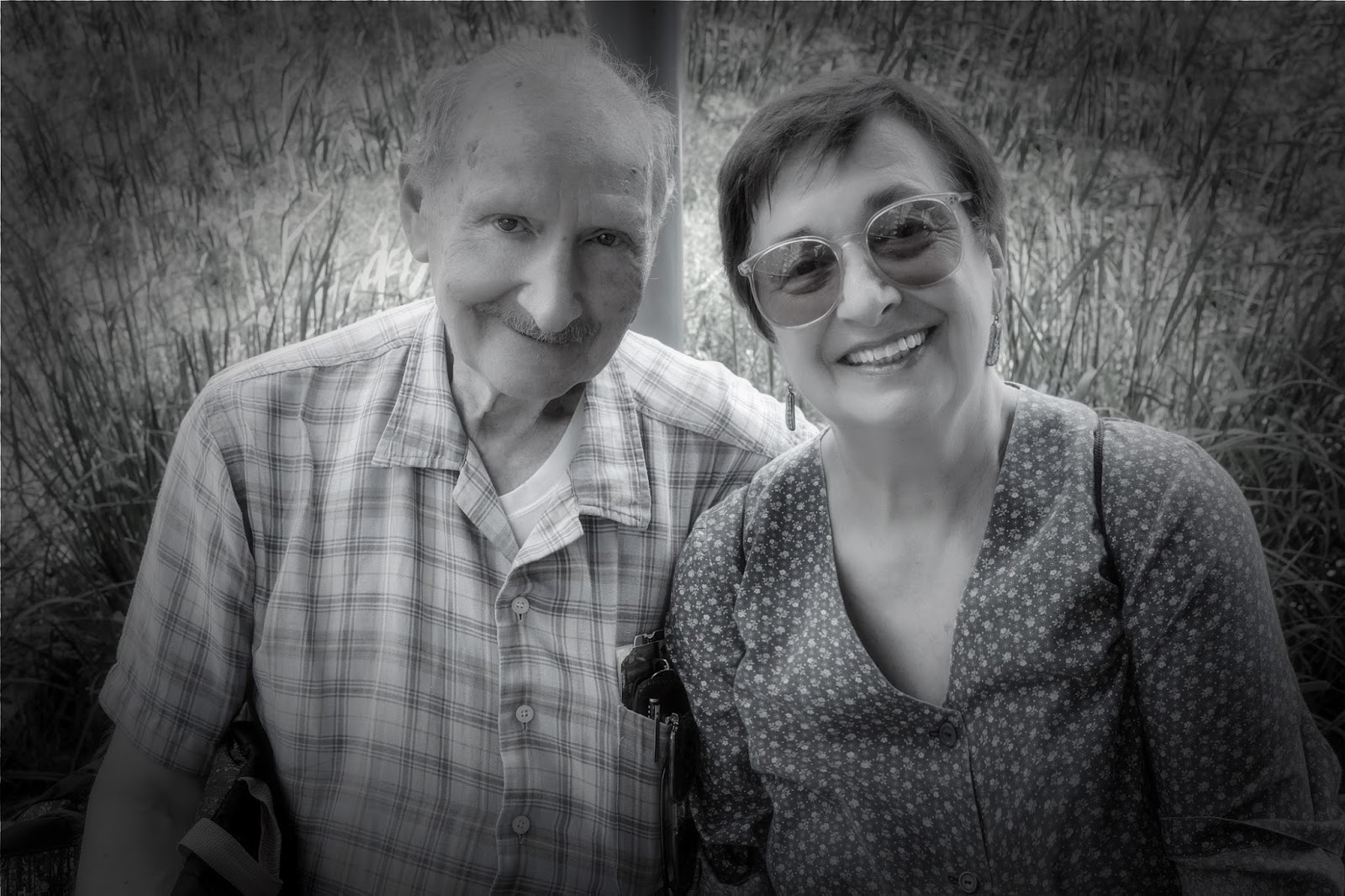
| James & Linda Henning. Photo by Bev Widney. |
Long before the current administration tried to close our borders to refugees struggling to find a safe home for their families, the Brooklyn neighborhood I grew up in faced a similar small-scale crisis:
The city planned to open a homeless shelter for women and children in Kensington, where my father grew up and still lives today with my mother.
For nearly fifty years he has served the community in its keystone organization, The Albemarle Neighborhood Association, and has taken an active role in neighborhood affairs.
In fall 2015 a community meeting was held to discuss "The Kensington" shelter and my father was appalled by the "absolute panic" of residents – many of whom were themselves immigrants seeking a better life – fearful of the newcomers' effect on the community.
As a longtime resident who knew the community's history of diversity and compassion, he drafted a short presentation to address these fears and remind his neighbors of the importance of lending a helping hand to those in need.
His words, over a year later, are even more relevant today, as we must continue to remember that we are a country united not by ethnicity or common heritage, but by ideals. And that most central ideal – to welcome those "yearning to breathe free" – must never be forgotten.
 |
| An ANA Table at a Recent Street Fair. Courtesy of KARMABrooklyn Blog. |
Comments for “The Kensington” Homeless Shelter Meeting, Thursday 12/10/2015
Good Evening. My name is James Henning. Perhaps you know me from the Albemarle Neighborhood Association.
I am a long-time resident of this neighborhood. Except for four years in the service, and four years living in Manhattan when my wife and I were first married, I’ve lived here all my life. I went to [the local elementary school] P.S. 130 – and my kids went to P.S.130 also. And although we don’t own a house, we have as much to lose as anyone in this auditorium if things went seriously wrong in this neighborhood.
So, we have a fair amount of trepidation regarding the opening of a homeless shelter here.
Even so, I think the people coming to the shelter, homeless mothers and their children, should be accepted into our neighborhood. It is the noble and compassionate thing to do.
I’m sure that many of us here have themselves been in dire straits at one time or another in their lives, or at least know people close to them who were in such a situation, and needed a helping hand.
These people, although strangers to us, are NYC residents and need acceptance and a helping hand for themselves and for their children.
Without a family network, or even friends with sufficient resources, they have turned to the city for this helping hand.
And the city has turned to us.
New York City at present is enjoying a period of prosperity. One way or another we all are enjoying the fruits of this prosperity. For example: Home owners are seeing their property values rise. Landlords are seeing see that they can charge higher rents for their apartments.
But, like so many things in life, this prosperity has a downside, and that downside is homelessness.
I think it only fair, that while enjoying this prosperity, we also assume responsibility for the homeless situation, and do our part.
I was at the meeting held at the Windsor Terrace Library and I must say that it was an embarrassment: Instead of witnessing respectful consideration of the points being presented by the attending officials, I witnessed absolute panic over what may or may not happen as a result of the opening of the shelter, and heard much anger and bitterness often aimed at things unrelated to the opening of the shelter.
In addition, I saw the officials being treated with appalling disrespect.
That said, I hope that you all here see the need for compassion and acceptance for those who will be our new neighbors.
One way to think of them is as immigrants.
Everybody here is either an immigrant or the descendant of immigrants and we’re all grateful for this country’s compassionate history of the welcoming of immigrants.
So, in that same spirit, rather than dismiss the shelter and its occupants out of hand, let’s welcome the new arrivals and, if problems arise, let’s deal with them rationally on a case-by-case basis.
We are a very diverse community, and this is something to boast about because we get along with each other quite well.
In fact, it has always been a diverse community – all the way back to the 1940s!
With this in mind, I trust that our “better angels” will guide us this evening to a thoughtful and constructive meeting regarding this new addition to our community.
Thank you.


